
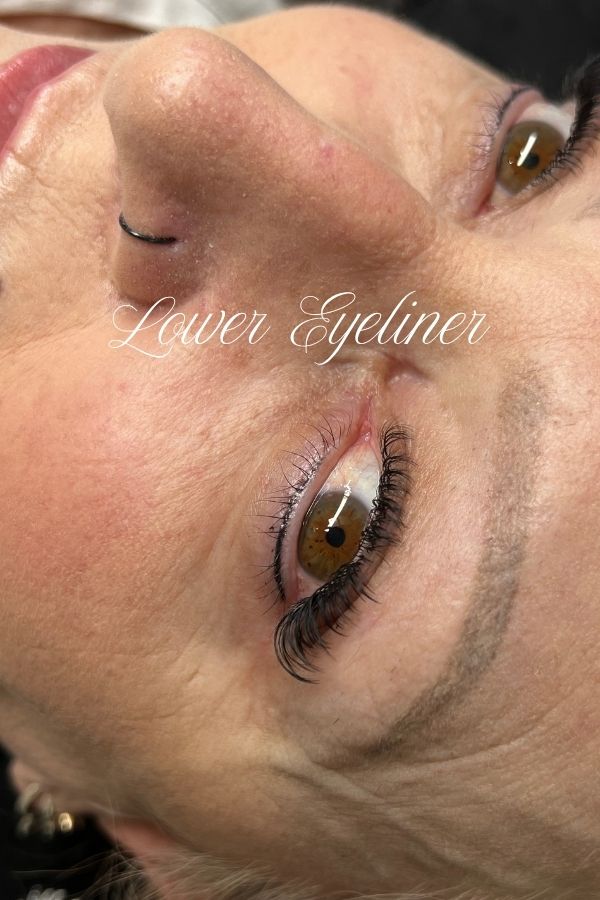
Why Salons That Master Single-Lash Application Keep Clients for Years
Here's the uncomfortable truth: most lash salons lose clients because of technique, not marketing. You can run perfect Instagram ads, offer competitive pricing, and have a beautiful salon space—but if your application damages lashes or feels heavy, clients won't come back. They just won't tell you why.
This isn't about perfecting your isolation skills or choosing the right adhesive. It's about understanding how technique precision directly affects your revenue. Single-lash application isn't just a technical choice. It's a business decision that determines whether clients rebook or quietly disappear.
The Retention Problem Most Lash Salons Don't See Coming
Salon owners obsess over attracting new clients. They spend on ads, run promotions, post constantly. Meanwhile, existing clients leave without explanation. No complaint. No negative review. They just stop booking.
The numbers make this expensive. Acquiring a new customer can cost 5 to 25 times more than keeping one you already have. Yet most salons can't tell you their retention rate. They don't track how many clients book once or twice, then vanish.
Ask yourself: how many of your clients from three months ago are still booking? If you don't know, you're probably losing more than you think.
Before you blame your marketing or your prices, consider this: poor lash application drives clients away silently. Heavy extensions that pull. Lashes that look sparse by week two. Natural lashes that break and thin over time. Clients notice all of it. They just don't tell you—they tell their friends, or they find another salon.
The problem isn't always visible in your appointment book. It shows up in the clients who don't return. For more insights on common misconceptions in lash care, check out our Articles section.
Why Single-Lash Application Changes the Client Experience

Single-lash technique means exactly what it sounds like: one extension applied to one natural lash. That's it.
Compare that to rushed applications where multiple lashes stick together, or volume fans applied without proper weight consideration. The difference isn't just technical. It's physical. Clients feel it immediately.
Three things change when you master single-lash application: comfort, longevity, and lash health. These aren't abstract benefits. They're what clients notice and remember when they decide whether to rebook.
Clients notice the weight difference immediately
Heavy lashes feel wrong. There's a pulling sensation on the eyelid. A constant awareness that something's there. Clients who've experienced poorly applied extensions elsewhere will comment on the difference within days of switching to proper single-lash technique.
Lighter lashes feel natural. Clients forget they're wearing extensions. That immediate comfort creates a first impression that influences every future booking decision. It's the difference between "these feel amazing" and "I can't wait to take these off."
Retention rates create visible proof between appointments
Properly applied single lashes last longer because there's less weight pulling on the natural lash. Simple physics.
Clients see the difference at week three. Their lashes still look full. Compare that to previous experiences where they looked sparse by week two and you've just created your salon's reputation. Clients tell their friends their lashes "actually last." That's word-of-mouth you can't buy.
This visible difference becomes your competitive advantage. Not because you promise longer retention—because clients experience it.
Damage prevention becomes your competitive advantage
Clients are getting smarter about lash health. They're asking questions about damage. They're noticing when their natural lashes thin or break.
Single-lash technique reduces breakage and premature shedding because each natural lash carries only the weight it can handle. This isn't just good practice. It's a long-term retention strategy. Clients stay because their natural lashes remain healthy.
Research shows that 53% of customers expect great service for loyalty. Preventing damage is part of that service standard. It's not extra. It's baseline.
The Economics of Technique: What Retention Actually Costs You

Photo by RDNE Stock project on Pexels
Let's talk numbers. What does losing clients actually cost your salon?
Every client who doesn't rebook represents lost revenue—not just from that appointment, but from every future appointment they would have booked. Multiply that by the clients who leave each month and you're looking at thousands of dollars walking out the door.
Here's the flip side: increasing retention by just 5% can boost profits by 25% to 95%. That's not a typo. Small improvements in retention create massive changes in profitability.
What would an extra 10 repeat clients per month do for your revenue? Calculate it. The number matters.
Acquisition cost vs. retention cost in your salon
Add up what you spend attracting new clients: social media ads, promotional discounts, time spent on content creation. Now compare that to what it costs to keep an existing client: delivering consistent quality that makes them want to rebook.
The math is brutal. Companies have a 60% to 70% probability of selling to existing customers, compared to just 5% to 20% for new ones. Yet most salons spend far more on acquisition than retention.
Investing in technique training is retention spending. It's not just skill development. It's choosing to keep the clients you already have instead of constantly replacing the ones who leave.
This doesn't mean cutting your marketing budget. It means making your marketing more effective by ensuring the clients it brings in actually stay.
How repeat bookings change your revenue predictability
Loyal clients create predictable monthly revenue. They book fills every three weeks. They show up. They pay. You can forecast your income with reasonable accuracy.
Contrast that with the feast-or-famine cycle of constantly chasing new clients. One month you're fully booked. The next month you're scrambling to fill gaps because half your clients didn't return.
Loyal customers often spend more per transaction too. They trust you. They're more likely to try additional services or upgrade to premium options. A simple example: 20 clients rebooking every three weeks generates far more stable revenue than 20 one-time appointments scattered across the same period.
That stable, consistent revenue makes financial forecasting actually possible. You can plan. You can invest. You can grow.
Training Investment That Pays for Itself
The objection is predictable: training takes time and money you're not sure you can afford.
Fair. But frame it differently. Technique training is a revenue investment, not an expense. It directly impacts the retention metrics we've just discussed. Better technique means more clients stay. More clients staying means more predictable revenue. More predictable revenue means you can actually afford to invest in your business.
The payback period is shorter than you think.
Time investment: what the transition period actually looks like
Be realistic. Single-lash technique may slow your application time initially. You're relearning habits. You're being more precise. That takes time.
Speed returns with practice, usually within four to six weeks of consistent application. Not overnight. Not after one training session. After deliberate, repeated practice.
Practical approach: train one technician first. Schedule longer appointments during the transition period. Build in buffer time. The temporary slowdown is offset by fewer correction appointments and higher retention. You're not losing time. You're investing it differently.
How to measure technique impact on your retention rate
Track two metrics: percentage of clients who rebook within four weeks, and average client lifetime (how many appointments before they stop booking).
Compare retention rates before and after technique training over a three-month period. That's long enough to see real patterns without waiting forever for data.
Calculate simple retention rate: divide clients who return by total clients, multiply by 100. If 70 out of 100 clients rebook, your retention rate is 70%. Track it monthly. Watch for changes.
Also track client feedback about comfort and lash longevity. Send follow-up messages after appointments. Ask specific questions. "How do your lashes feel?" "How long did they last?" Real answers from real clients matter more than assumptions.
Keep measurement simple. You need actionable data, not complex analytics. If retention improves, the training paid off. If it doesn't, something else needs attention.
Why Your Competitors Are Already Making This Shift

Salons that prioritise technique quality are capturing the clients who value lash health. Those clients exist. They're looking for salons they can trust. They're willing to pay for quality. They're the clients you want.
As client education increases through social media and reviews, technique quality becomes a differentiator. Clients know what questions to ask now. They know what good lashes should feel like. They're comparing experiences.
This connects back to the opening problem: salons that don't adapt will keep losing clients to those who do. Not because of better marketing. Because of better results.
77% of consumers stick to five brands or fewer. Becoming one of those brands requires consistent quality. Not perfection. Consistency.
Your next step is straightforward: evaluate your current technique and retention data this week. Not next month. This week. Look at how many clients from three months ago are still booking. Look at the feedback you're getting about comfort and longevity. Be honest about what you find.
The opportunity here isn't to chase trends or copy competitors. It's to build a loyal client base through better technique. That's sustainable. That's profitable. That's how you stop losing clients and start keeping them for years.

Leave a comment
This site is protected by hCaptcha and the hCaptcha Privacy Policy and Terms of Service apply.