
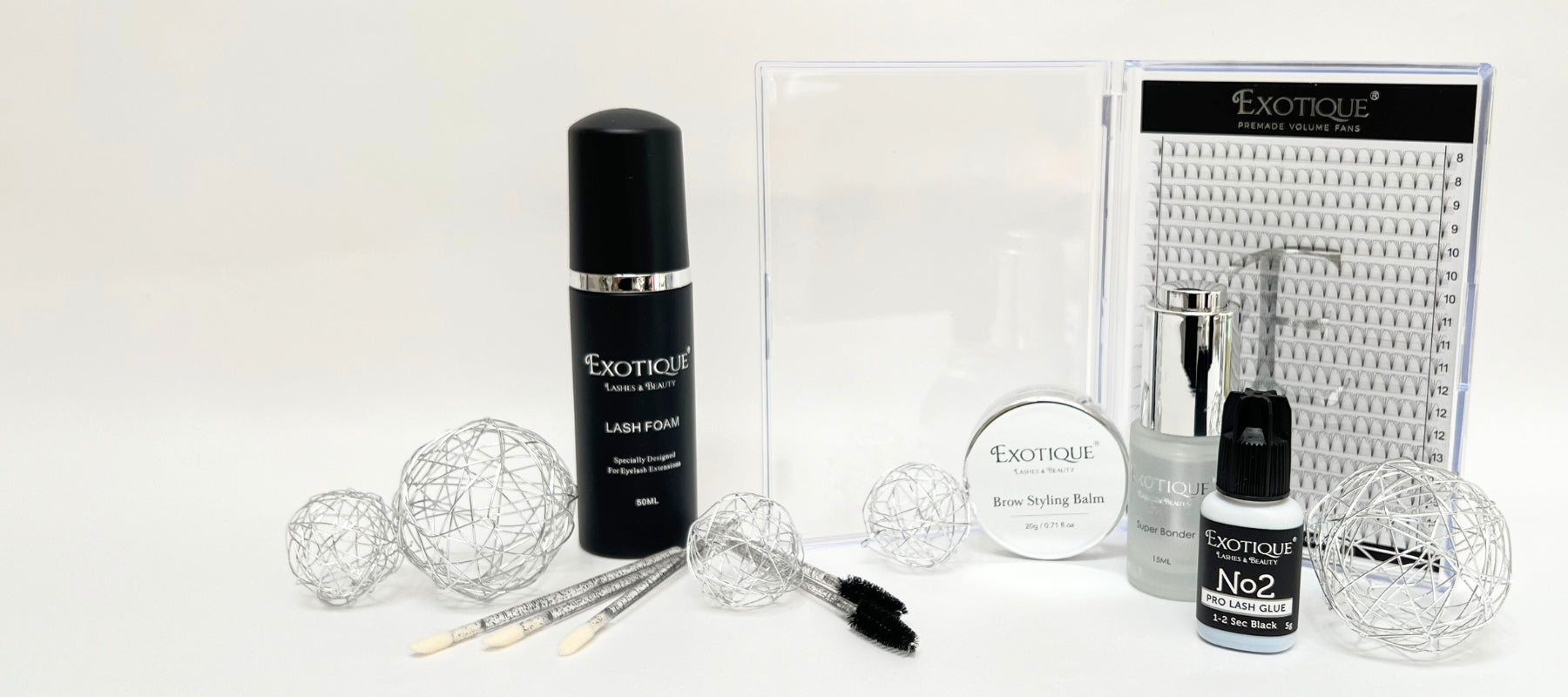
How to Choose the Right Lash Supplier: What Every Lash Artist Must Check Before Buying Products
You're halfway through a full set when you notice the curls aren't holding. The adhesive that worked perfectly last week is drying too fast today. Your client's asking why her lashes look different from her last appointment, and you don't have a good answer.
This isn't about finding the cheapest supplier. It's about finding the most reliable one. The difference between a thriving salon and constant client complaints often comes down to one decision: who you trust to supply your products.
What follows are the checks professionals run before signing contracts, not after problems start. If you're evaluating suppliers right now, these questions will save you months of frustration.
Why Your Lash Supplier Choice Matters More Than You Think

One bad batch of lashes can undo months of relationship building with your clients. You've spent time understanding their preferences, perfecting their look, building trust. Then inconsistent products make you look unreliable.
When adhesive dries too fast, you're rushing through applications and compromising placement. When lashes shed within days, clients assume you've done something wrong. They don't blame the supplier. They blame you.
This isn't about price differences. It's about business continuity. Can you deliver consistent results every single appointment? That depends entirely on whether your supplier can deliver consistent products every single order.
For more insights on maintaining quality standards in your lash work, explore our Articles section.
Product Consistency: The Non-Negotiable Foundation

Consistency matters more than perfection. You need to know exactly how products will perform every time. A quality control checklist serves as a systematic guide to ensure products meet established standards and minimise errors, which is exactly what separates professional suppliers from amateur ones.
Batch variation means products from different production runs perform differently. Adhesive that works perfectly in winter but fails in summer humidity shows poor consistency. You can't build a business on products you can't predict.
The following checks help you test supplier reliability before you commit.
Request samples from multiple batches, not just one
One perfect sample means nothing if the next batch performs differently. Ask for samples from at least three different production batches with different dates. Test each batch on actual clients, with their permission, to compare performance.
Don't accept "our quality is always consistent" as an answer. Insist on proof. Professional suppliers expect this request and have systems in place to accommodate it.
Ask for their defect classification system in writing
Professional suppliers have written standards defining what counts as a defect. A well-structured QA checklist includes specific details such as product dimensions and defect classifications to ensure thorough quality assurance.
Ask directly: "What percentage of defects do you consider acceptable, and how do you classify them?" Good suppliers will have categories like critical, major, and minor defects with specific examples. Critical might be adhesive that doesn't bond. Major might be inconsistent curl. Minor might be slight packaging damage.
Vague answers or "we don't really have defects" are red flags. Every manufacturer has standards. The question is whether they'll share them with you.
Check if they conduct in-process inspections, not just final checks
Checking only finished products means defects are caught too late. In-process inspections are essential in quality control, identifying issues during production rather than after entire batches are complete.
Ask suppliers: "At what stages during production do you inspect products?" Look for answers mentioning raw material checks, mid-production inspections, and final quality control. This approach mirrors Toyota's continuous quality checks throughout production, not just at the end.
Don't accept "we check everything at the end." That's how entire batches get shipped with problems.
Business Reliability: What Happens When Things Go Wrong

Photo by MART PRODUCTION on Pexels
Even great products are useless if they arrive late or the supplier ghosts you when issues arise. You've got six clients booked tomorrow and your order hasn't arrived. What happens next? That answer determines whether this supplier is viable.
Test their response time with a pre-order question
Send a detailed question before placing your first order and time the response. Ask something specific like "What's the difference between your 0.15mm and 0.18mm lash bases?"
Response time and quality now predicts how they'll handle urgent problems later. If they take more than 24 hours for a simple question, or send a generic response that doesn't actually answer what you asked, that's your answer about their customer service.
Ask about their post-shipment quality control process
Post-shipment quality control addresses problems found after delivery, and it's a key element of comprehensive QA checklists. Tell them: "What's your process if I receive products that don't meet your quality standards?"
Look for specific answers. Replacement timelines. Who pays shipping. How refunds work. Get the process in writing before ordering. "We'll sort it out" isn't good enough when you're dealing with client appointments you can't reschedule.
Find out who owns the relationship
There's a difference between having one dedicated contact versus dealing with whoever answers the phone. Ask directly: "Will I have a dedicated account manager, or do I contact general support?"
One person who knows your business can solve problems faster. They remember your preferences, understand your order patterns, and can make decisions without escalating everything. Rotating support isn't necessarily bad for small orders, but dedicated contacts are better for ongoing relationships.
If you're building a serious lash business and need reliable supplier partnerships, contact Exotiquelashes to discuss your specific requirements.
Documentation and Traceability: Your Safety Net

Photo by MART PRODUCTION on Pexels
Proper documentation protects you if products cause client reactions or don't perform as promised. It's also connected to legal and insurance requirements. You may need to prove product safety and origin. Batch numbers and material certifications are essential QA checklist elements that serious suppliers provide as standard practice.
This isn't meant to sound scary. It's professional due diligence that serious suppliers expect.
Request copies of their inspection reports for a recent order
Ask for actual inspection reports from a recent production run, not generic certificates. Real reports show specific measurements, defect rates, and who conducted the inspection. Suppliers using proper quality control checklists will have these readily available.
If they respond with "we don't share those" or only provide generic compliance certificates, that's a red flag. Professional suppliers are proud of their inspection processes.
Verify they provide batch numbers and material certifications
Batch numbers let you trace products back to specific production runs if problems occur. Ask: "Do you provide batch numbers on packaging and material safety certifications?"
This is standard practice for professional suppliers and required for insurance purposes. Don't order from suppliers who can't or won't provide this basic traceability. If something goes wrong, you need to know exactly which batch was affected and what materials were used.
The Conversation That Reveals Everything
How suppliers respond to these questions tells you more than their marketing materials ever will. Professional suppliers welcome these questions because they're proud of their systems. They understand you're running a business, not just buying products.
This upfront work prevents the nightmare scenario of inconsistent products and lost clients. It's the difference between building a sustainable lash business and constantly firefighting quality problems.
Create your own checklist from these points and use it for every supplier conversation. Write down their answers. Compare responses across suppliers. The patterns will become obvious quickly.
Start with one question today. Send it to your current supplier or a potential new one. See how they respond. That single interaction will tell you whether they're worth your business.
For professional-grade lash supplies backed by quality assurance processes you can rely on, reach out to Exotiquelashes for a consultation on your specific needs.


Leave a comment
This site is protected by hCaptcha and the hCaptcha Privacy Policy and Terms of Service apply.