
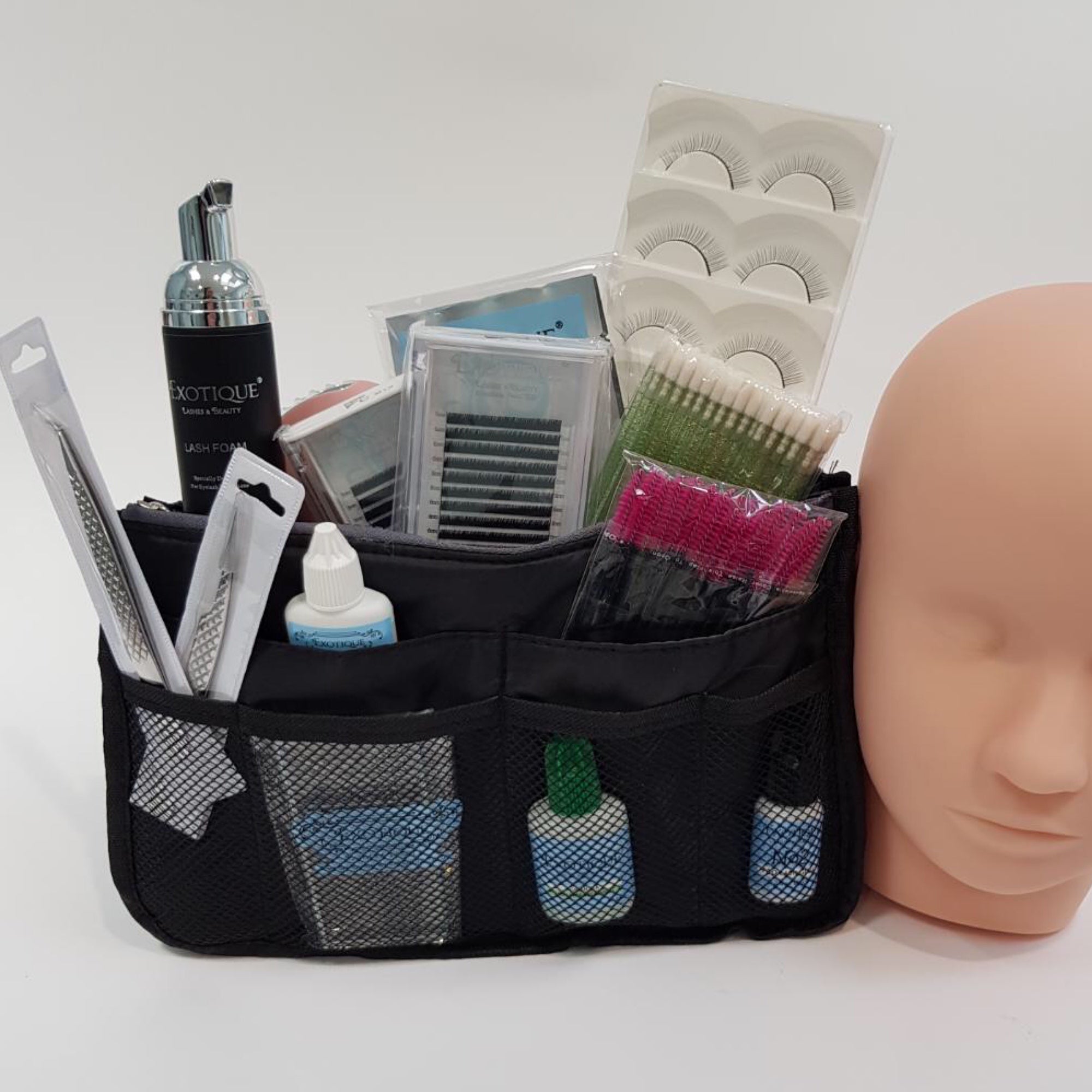
Professional Lash Artist Kit Essentials: Must-Have Lash Products for Better Retention & Application
What's Actually In a Pro Lash Artist's Product Kit
Walk into any lash studio and you'll see two types of setups. One looks sparse. A few trays, one glue, basic tweezers. The other looks like a small pharmacy. Dozens of adhesive bottles, colour-coded tray systems, multiple sets of tools.
The difference isn't about spending more. It's about knowing what actually matters when a client sits in your chair.
The Kit Gap: What Separates a $200 Setup from a $2,000 One
A beginner kit gets you started. A professional kit keeps you working.
The $200 setup usually includes one adhesive, maybe three curl types, a single pair of tweezers, and some basic prep products. It works until you meet a client with sensitive eyes. Or someone who wants a dramatic cat-eye that requires volume fans you don't stock. Or the humidity drops and your glue stops performing.
The $2,000 kit isn't about luxury. It's about having options when standard approaches fail. Multiple adhesive formulas for different conditions. Enough lash variety to create any look without compromise. Tools that don't fatigue your hands after six appointments.
Most pros build their kits over 12-18 months. You don't need everything immediately. But you need to know what you're building towards.
Adhesives: Why Pros Stock Multiple Formulas (Not Just One 'Best' Glue)
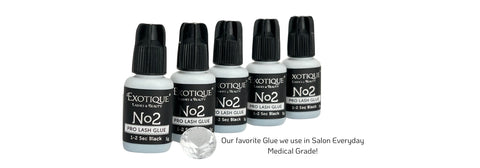
There's no single best adhesive. Anyone who tells you otherwise hasn't worked with enough clients.
Your adhesive needs change based on three variables: your skill level, your client's sensitivity, and your room conditions. Pros keep at least three formulas on hand because these variables shift constantly.
Fast-dry formulas for experienced hands (1-2 second dry time)
Fast-dry adhesives aren't for everyone. They set in 1-2 seconds, which means you need precise isolation and placement. Hesitate and you've glued natural lashes together.
But when you're confident, they're efficient. You can complete a full set in under 90 minutes without rushing. The trade-off is less room for error and higher fume levels, which some clients react to.
Sensitive formulas for clients with reactive eyes
About one in five clients will have some reaction to standard adhesives. Watery eyes, redness, or mild stinging during application.
Sensitive formulas use lower cyanoacrylate concentrations and different stabilisers. They dry slower (3-4 seconds) and may not last quite as long, but they prevent callbacks from clients who can't tolerate regular glue.
Keep one bottle in your kit. You'll use it more than you expect.
Humidity-specific options for seasonal rotation
Adhesive performance changes with humidity. Most formulas work best between 40-60% relative humidity. Go outside that range and you'll see retention problems.
Winter in most Australian cities drops humidity below 40%. Summer can push it above 70%. Pros either control their room environment or rotate adhesives seasonally. Trying to force a summer formula to work in winter conditions wastes product and frustrates clients.
Lash Extensions: The Diameter, Curl and Length Matrix Pros Actually Use

This is where kit costs escalate quickly. And where most beginners understock.
You can't create custom looks with limited inventory. A client wants a natural C-curl set? You need 0.15mm lashes in 8-13mm lengths. Someone wants dramatic volume? You need 0.03-0.07mm fans in D-curl. Hybrid set? You need both.
Why pros stock 0.03mm to 0.25mm in every curl type
Lash diameter determines weight and volume potential. Curl type determines the final shape. You need both variables covered to handle different natural lash conditions.
Thin natural lashes can't support 0.20mm extensions. Thick natural lashes look sparse with 0.07mm. C-curl looks natural on most eyes. D-curl creates lift. L-curl works for hooded eyes or downward-growing lashes.
Stocking every combination isn't realistic initially. But you need enough range to avoid forcing unsuitable products onto clients just because it's what you have.
The minimum viable inventory: 48+ tray combinations
Here's the practical minimum for a working pro:
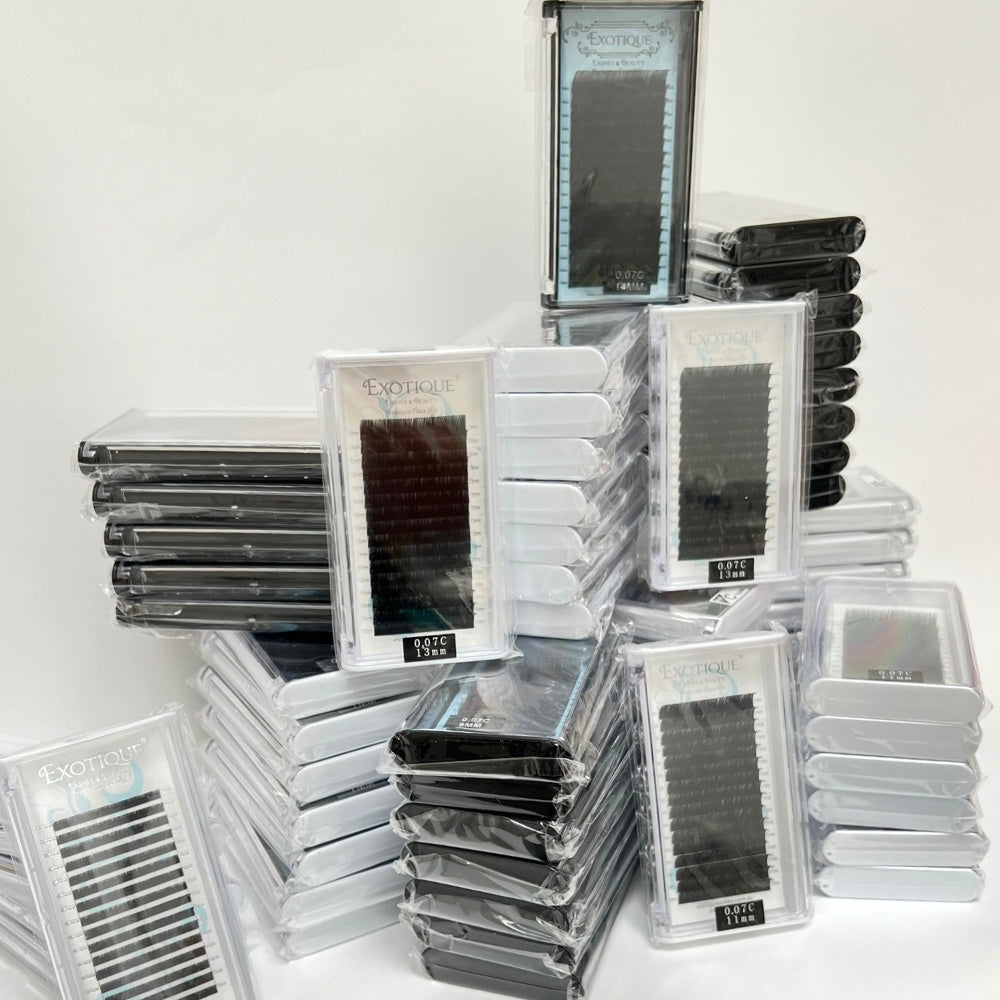
Three diameters (0.07mm, 0.15mm, 0.20mm). Four curl types (C, D, L, M). Four length ranges per curl (8-9mm, 10-11mm, 12-13mm, 14-15mm). That's 48 trays before you add specialty options.
It sounds excessive until you're three appointments into a day and realise you're out of 11mm D-curl in 0.15mm. Then you're either cancelling the client's preferred look or making a supply run mid-shift.
Specialty lashes: coloured, flat, and premade fans
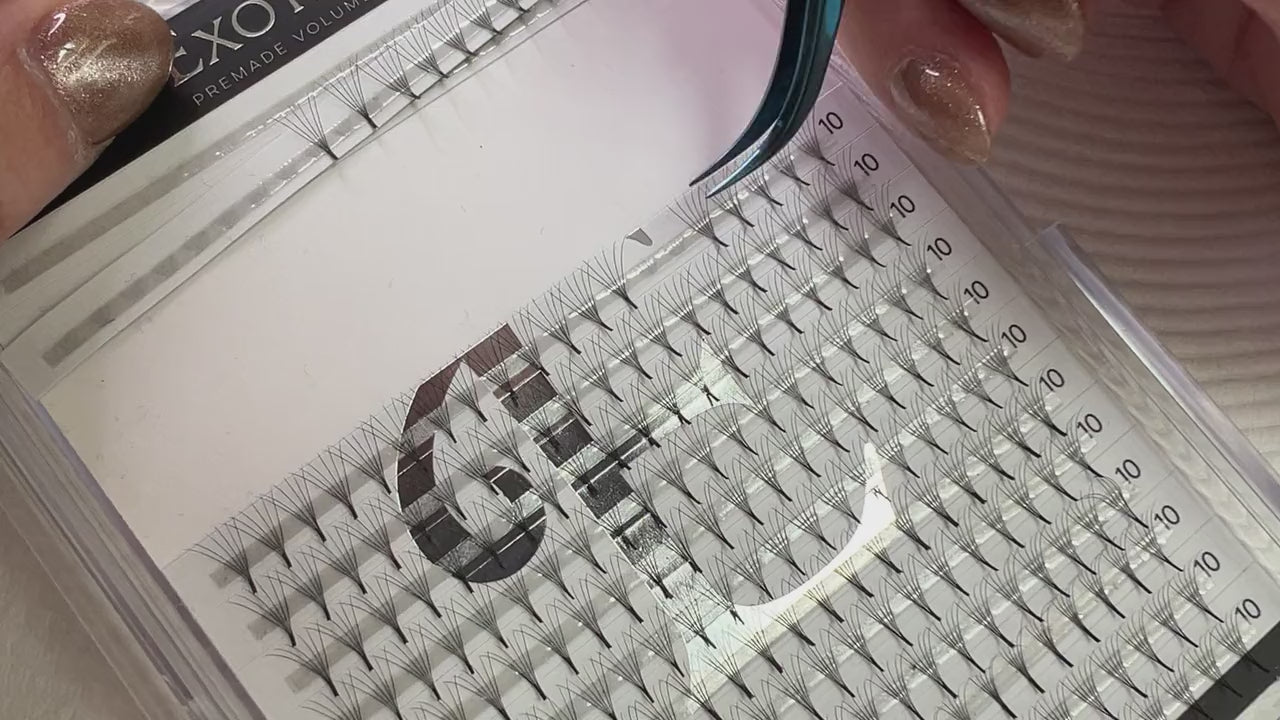
Coloured lashes, flat lashes, and premade volume fans aren't essential. But they expand what you can offer.
Flat lashes have an elliptical base that creates darker lash lines without added weight. Premade fans save time on volume sets. Coloured lashes let you offer subtle highlights without makeup.
Add these after you've covered your core inventory. They're nice to have, not need to have.
Tools and Precision Instruments: Where Build Quality Actually Matters

Cheap tweezers cause hand fatigue. That's not an opinion. It's what happens after your third appointment when your fingers start cramping.
Professional-grade tools cost more upfront but last years and reduce physical strain. This matters when you're working 6-8 hour days.
Isolation tweezers: Japanese stainless vs. coated vs. fibre-grip
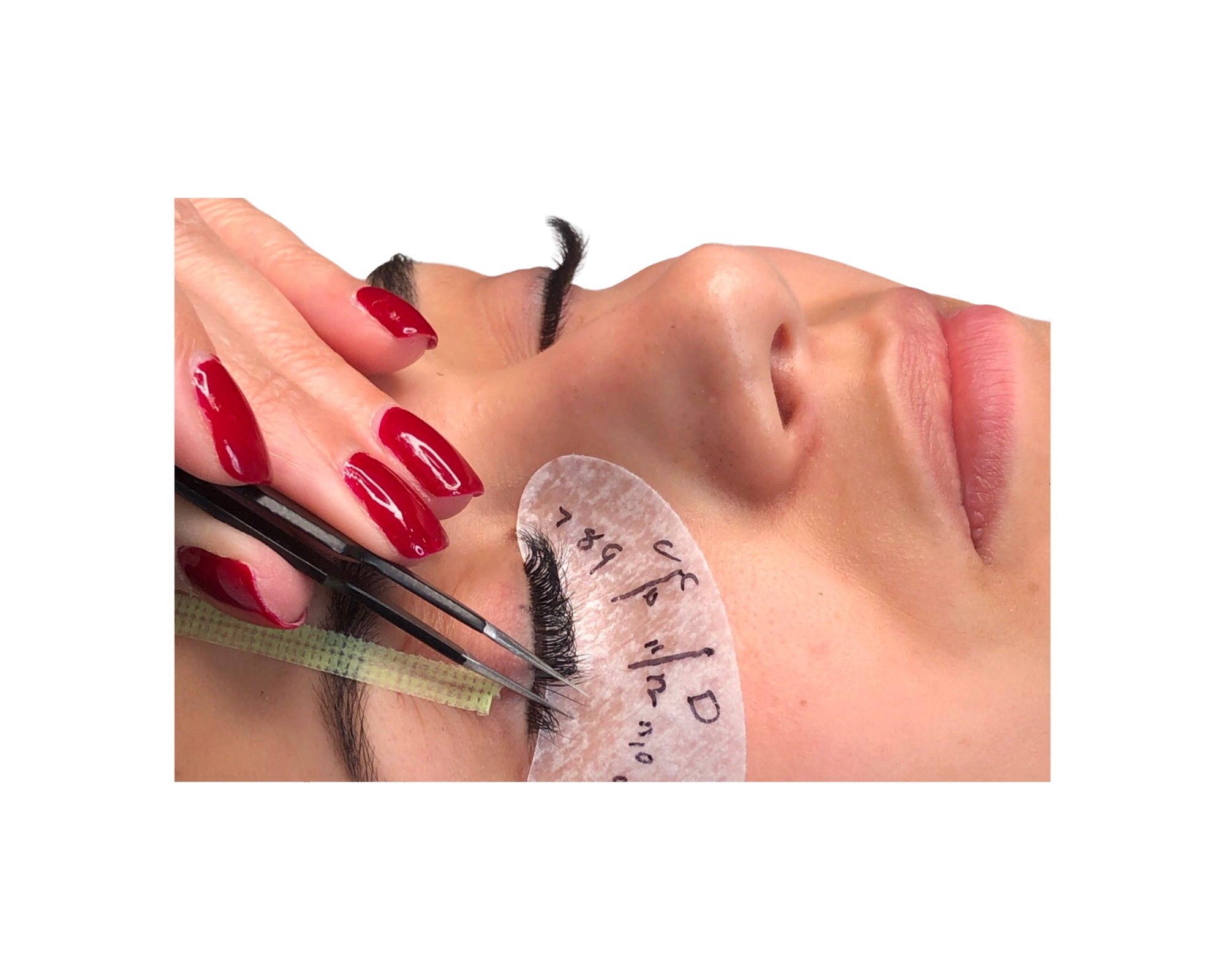
Isolation tweezers hold individual natural lashes while you apply extensions. They need to grip without slipping and close precisely without effort.
Japanese stainless steel tweezers hold their alignment longer. Coated tips reduce glue buildup. Fibre-grip options provide extra hold on fine lashes. Most pros own at least two pairs and rotate them to prevent tip misalignment from constant use.
Application tweezers: the L-shape, curved, and volume specialists
Application tweezers pick up and place extensions. The shape you choose depends on your technique and hand position.
L-shaped tweezers suit artists who work at an angle. Curved tweezers work well for volume fans. Straight tweezers offer precision for classic sets. You'll likely try several before finding what feels natural.
Don't buy the cheapest option. Your hands will remind you of that mistake for months.
Magnification: why pros use 2.5x to 3.5x loupes, not lamps alone
Good lighting helps. Magnification changes what you can see.
Lash extensions require isolating individual natural lashes that are 0.1mm thick. Without magnification, you're guessing. With 2.5-3.5x loupes, you can see exactly what you're working with.
Lamps with built-in magnifiers work but limit your head movement. Wearable loupes give you flexibility and reduce neck strain from leaning in constantly.
Prep, Prime and Aftercare: The Unsexy Products That Prevent Callbacks

Adhesive gets attention. Prep products prevent problems.
Most retention issues trace back to inadequate preparation. Oil residue, protein buildup, or moisture on natural lashes all compromise adhesive bonding. Proper prep eliminates these variables.
Oil-free cleansers and protein removers for pre-treatment
Natural lashes accumulate oil from skin, makeup residue, and sebum production. Standard cleansers often contain oils that interfere with adhesive curing.
Oil-free lash cleansers remove surface contamination. Protein removers break down keratin buildup that creates an uneven bonding surface. Use both before every application. It takes two minutes and prevents retention complaints.
Primers and bonders: what they do differently and when to use each
Primers and bonders aren't the same product despite similar marketing.
Primers prepare the natural lash surface by adjusting pH and removing remaining residue. Bonders accelerate adhesive curing and reduce sensitivity by neutralising fumes faster. Some products combine both functions.
Use primer before application. Apply bonder after completion. Don't skip either on clients with known sensitivity or retention issues.
Client take-home kits that reduce retention complaints
Retention isn't just about application quality. It's about what clients do after they leave.
Most retention problems happen in the first 48 hours when clients touch their lashes, use oil-based products, or get them wet too soon. A basic aftercare kit with lash cleanser, a spoolie, and clear instructions prevents most of these issues.
Exotiquelashes offers complete aftercare solutions designed specifically for Australian lash professionals. Their client kits include everything needed to maintain retention between appointments, reducing callbacks and building client trust.
Environment Control: The Kit Items That Aren't in a Case
Your room conditions affect adhesive performance more than most artists realise.
Temperature and humidity directly impact curing speed and bond strength. You can have perfect technique and premium products, but if your room is too dry or too humid, retention suffers.
Hygrometers and humidifiers for adhesive performance
A hygrometer measures humidity. A humidifier adjusts it. Both are essential for consistent results.
Most adhesives specify optimal humidity ranges (typically 40-60%). Check your room conditions before each shift. If humidity is low, run a humidifier. If it's high, use a dehumidifier or adjust your adhesive choice.
This isn't optional for pros. It's basic quality control.
Nanomisters for instant polymerisation
Nanomisters release ultra-fine water mist that accelerates adhesive curing without disrupting the bond.
Use them at the end of application to lock in extensions and reduce fume exposure. The mist triggers final polymerisation, which improves initial retention and reduces client sensitivity.
They're not expensive. They make a noticeable difference.
Building Your Kit in Stages: The Upgrade Path That Makes Financial Sense

Don't try to buy everything at once. Build your kit as your client base grows.
Start with core essentials: two adhesive formulas, basic curl and diameter range, one good set of tweezers, prep products. This gets you working. As you book more appointments, add specialty items based on actual client requests, not theoretical needs.
Track what you run out of first. That tells you what to stock more of. Notice which clients you can't accommodate? That tells you what to add next.
Most pros reach a fully stocked kit within 12-18 months of consistent work. Rushing it creates waste. Building strategically creates capability.
If you're building your professional kit and want expert guidance on what actually matters for Australian conditions, Exotiquelashes specialises in wholesale supplies for working lash artists. They understand the difference between beginner setups and professional systems because they work with artists at every stage. Get in touch for advice on building a kit that matches your actual needs, not just a product list.

Leave a comment
This site is protected by hCaptcha and the hCaptcha Privacy Policy and Terms of Service apply.