
Classic, Hybrid or Volume Lashes? A Complete Guide to Choosing Your Perfect Set
You're about to book your lash training and three different people have told you three different things. Your trainer says start with classic. Instagram says volume is where the money is. Your friend who's been lashing for six months swears hybrid is the easiest entry point.
Here's what actually matters: your first technique choice determines how quickly you start earning safely, how fast you build a client base, and whether you'll spend the next six months fixing damage you didn't know you were causing.
This guide shows you which technique gets you working confidently and earning consistently, based on what actually happens when new lash artists enter the market.
Why Your First Lash Technique Matters More Than You Think
Learning volume before you can isolate a single lash properly doesn't just slow you down. It creates real problems.
A trainee in Melbourne jumped straight to volume after a two-day course. Within three weeks, she had two clients with visible lash damage and one formal complaint. The issue wasn't her intention or her work ethic. She simply hadn't developed the isolation skills needed to apply multiple extensions safely. She spent the next four months relearning classic technique, rebuilding her reputation, and refunding clients.
The financial impact is straightforward. Students who start with the wrong technique typically waste three to six months relearning fundamentals they should have mastered first. That's three to six months of lost income, delayed bookings, and damaged confidence.
When you apply volume fans to poorly isolated natural lashes, you create clumping, premature shedding, and potential follicle damage. Your clients don't return. Your reviews suffer. Your insurance provider starts asking questions.
This isn't about choosing wisely in some abstract sense. It's about understanding that technique progression exists for safety reasons, not arbitrary training conventions.
Classic Lashes: The Foundation Every Lash Artist Needs

Classic lashes teach you three skills you'll use in every other technique: isolation, placement, and adhesive control.
This is the safety-first option. One extension per natural lash means less weight, lower risk of damage, and a clear view of what you're actually doing. If you can't apply a single extension cleanly, you won't be able to apply five at once.
Classic isn't easier. It's foundational. There's a difference.
What classic lashes actually involve (and what they don't)
Classic means a 1:1 ratio. One extension applied to one isolated natural lash.
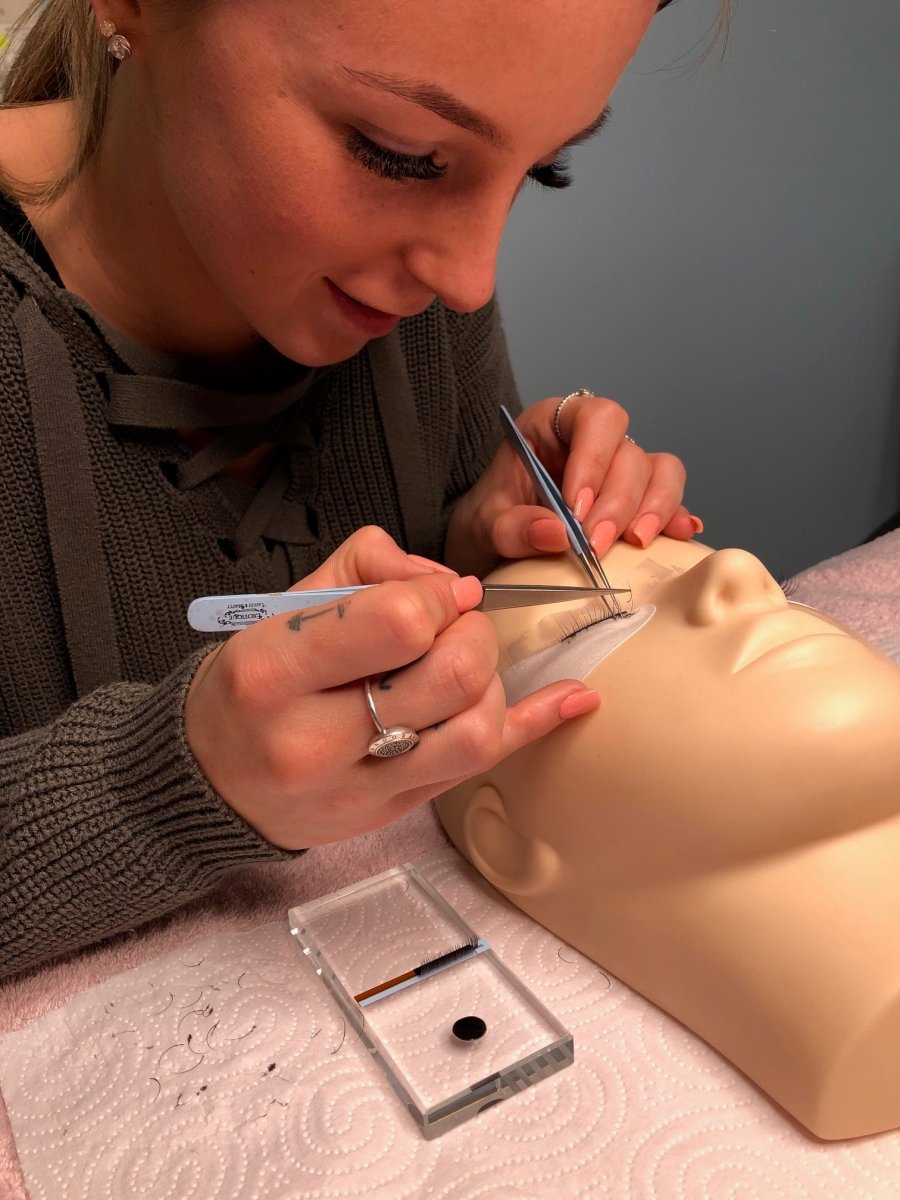
What you're physically doing: isolating a single natural lash with one tweezer, picking up an extension with your other tweezer, dipping it in adhesive, placing it 0.5-1mm from the lash line, and holding it steady for 1-2 seconds while the adhesive sets.
Classic isn't basic or outdated. It still represents 40-50% of salon bookings in 2026. Clients who want natural enhancement, clients with sparse natural lashes, and clients over 40 typically book classic sets. That's a substantial market.
Why 80% of trainers recommend starting here
You can't hand-make fans if you can't isolate a single lash properly. The muscle memory for precise hand movements starts with classic technique.
Classic builds the foundation for everything else. Your hand learns how to hold tweezers at the correct angle. Your eyes learn how to identify healthy lashes suitable for extensions. Your brain learns how to work methodically across a lash line without missing sections.
Insurance providers often require classic certification before they'll cover volume work. They understand the risk progression. You should too.
Realistic earnings and client retention for classic sets
Classic full sets typically cost $120-180 in Australian metro areas. Infills run $60-90.
Time matters here. Classic sets take 90-120 minutes once you're competent. That means you can fit more clients per week as you speed up, which directly impacts your weekly income.
Classic clients typically return every 2-3 weeks. That creates predictable income. You know roughly how many bookings you'll have next month based on this month's new clients.
Classic has the broadest client base. It suits all ages, all lash types, and all budgets. When you're building a business from zero, that breadth matters more than premium pricing.
Volume Lashes: Higher Pay, Steeper Learning Curve
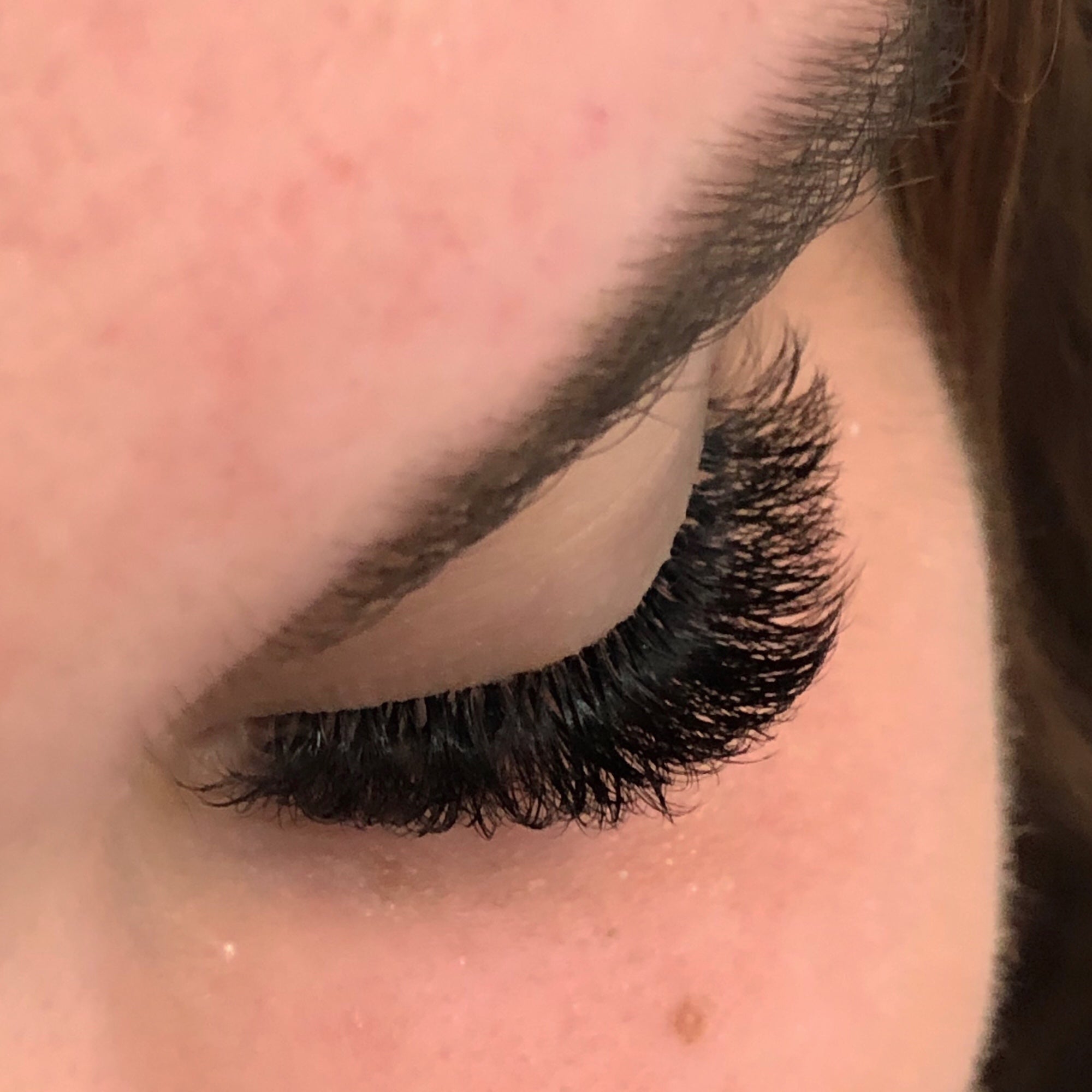
Volume commands premium prices. It also requires months of deliberate practice to execute safely.
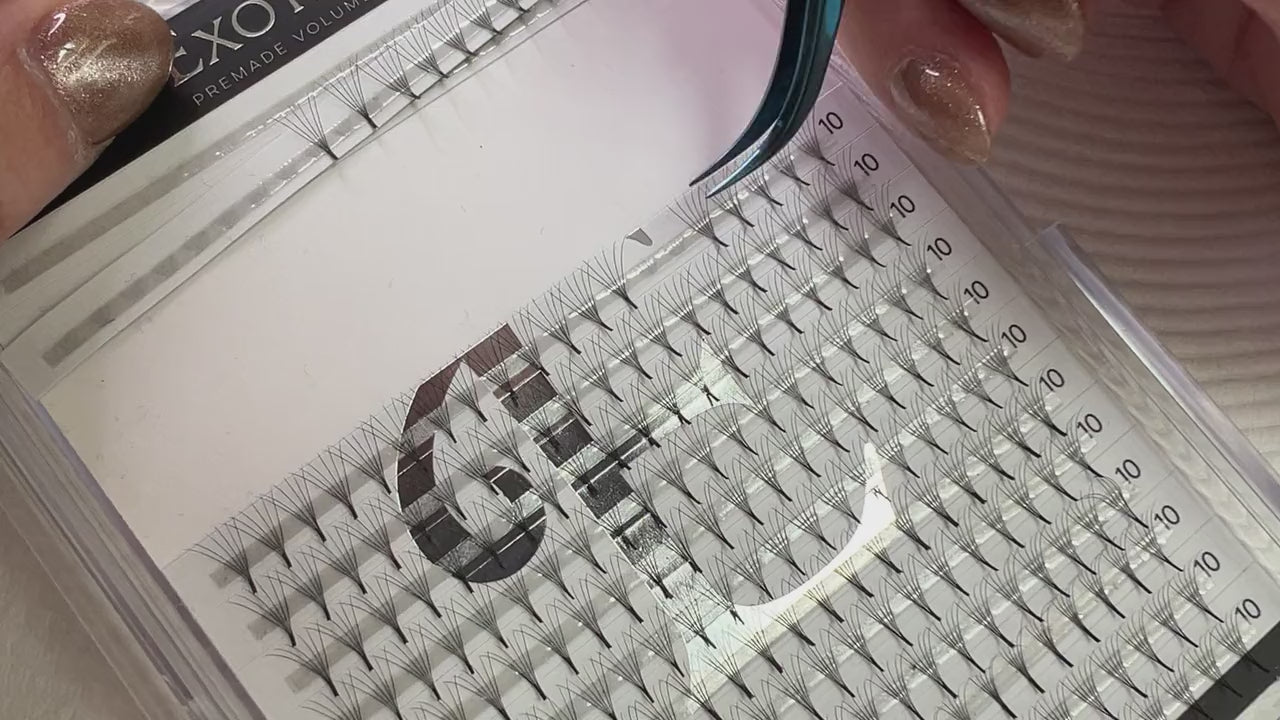
The core challenge is hand-making fans. You're picking up 2-6 ultra-fine lashes and fanning them with tweezers before application. This requires completely different motor skills than classic technique.
Don't avoid learning volume. Just understand the timeline is longer than most training courses admit.
The hand-making skill that takes 6-12 months to master
Hand-making fans involves picking up multiple 0.03-0.07mm lashes and fanning them with precise pressure and angle using your tweezers.
These lashes are thinner than human hair. The pressure required to fan them without crushing them is something your hands learn through repetition, not instruction.
Most artists practice 2-3 hours daily for months before achieving consistent, safe fans. That's not an exaggeration. That's the actual timeline for developing reliable muscle memory.
Rushing this skill leads to uneven fans, poor retention, and potential lash damage. Clients notice when fans are inconsistent. They definitely notice when their natural lashes start breaking.
Where volume artists actually make their money
Volume full sets range from $180-280 in Australian cities. Mega volume can reach $250-350+.
Volume takes longer initially. Expect 2-3 hours for your first paying clients. Experienced artists complete sets in 90-120 minutes, but that speed comes after hundreds of practice hours.
Volume clients often want dramatic looks for events. That means less consistent rebooking than classic. They're not coming every two weeks for maintenance. They're coming before weddings, parties, holidays.
The real money comes from offering both classic and volume, not volume alone. You need the full client spectrum to fill your calendar consistently.
The insurance and safety considerations no one mentions in training
Volume lashes create more weight on natural lashes. You need to assess lash health properly before application. Not every client is suitable for volume.
Some insurance policies require additional certification or documented experience hours before they'll cover volume services. Check your policy before you start advertising volume sets.
Improper volume application causes the most lash damage complaints. Too-heavy fans, poor isolation, and incorrect adhesive use create problems that take months to resolve.
This isn't about creating fear. It's about recognising that volume requires more safety knowledge than a basic training course typically covers. For more guidance on proper aftercare and technique, check out our Articles section.
Hybrid Lashes: The Middle Ground That's Not Always Easier

Hybrid isn't a beginner-friendly compromise. It actually requires competence in both classic and volume techniques.
Hybrid means mixing classic and volume fans on the same lash line to create texture. You're making decisions about which lashes get classic extensions, which get volume fans, and how to maintain symmetry across both eyes.
Learn this third, not second. Only attempt hybrid once you're confident with both classic and volume independently.
Why hybrid requires skills from both techniques
You need classic isolation skills plus volume fan-making ability in the same set. You're switching between techniques constantly throughout the application.
The additional complexity: deciding placement strategy. Which lashes get classic? Which get volume? How do you maintain symmetry when you're using two different techniques?
Hybrid takes as long as volume initially, often 2+ hours. But it doesn't command significantly higher prices than volume. You're doing more work for roughly the same money until you get faster.
Hybrid isn't a shortcut. It's an additional service you offer once you've mastered the fundamentals.
Client types who specifically request hybrid (and why that matters)
The typical hybrid client wants more than classic but finds full volume too dramatic. They're usually looking for natural enhancement with slightly more fullness.
Hybrid clients are often 30-50 year olds seeking enhancement for daily wear, not special occasions. They want to look polished without looking obviously done.
Hybrid pricing sits between classic and volume, typically $150-220. It's a mid-tier service that expands your market, but only after you can deliver both techniques confidently.
Offering hybrid before you're ready damages your reputation faster than not offering it at all. Clients can tell when you're uncertain.
Your 90-Day Specialisation Plan

Ninety days of focused practice on one technique beats ninety days dabbling in all three.
This timeline assumes you're starting from basic training. Your circumstances might require adjustments, but the principle holds: depth before breadth.
If you're still in TAFE: which technique to prioritise in your practice hours
Use all available practice hours on classic until you can complete a full set in under 90 minutes.
TAFE models are your free practice. Use them to build speed and consistency in isolation. Don't waste this opportunity trying to learn everything at once.
Track your practice. Aim for 20-30 full classic sets before attempting volume on models. That's roughly the point where your hands know what they're doing without conscious thought.
You can learn volume theory while practicing classic. Watch videos, study techniques, understand the principles. But don't split your hands-on time. Your muscle memory needs repetition in one technique before it can handle another.
If you're building a client base: the technique that fills your books fastest
Classic fills books fastest. It has the widest client appeal and the lowest price barrier.
Offering classic first builds your reputation and reviews while you practice volume on the side. You need those reviews. New clients check them before booking.
Transition plan: add volume to your menu once you have 30+ classic clients and consistent 5-star reviews. At that point, you have proof you can deliver quality work safely.
Trying to offer everything immediately makes you look inexperienced. Clients can sense uncertainty. Specialise first, expand second.
The One Thing to Do Before You Commit
Book lash appointments with three different artists. One who specialises in classic, one in volume, one in hybrid.
Watch their hands. How do they isolate? How do they hold tweezers? How long does each technique actually take?
Ask each artist which technique they learned first and whether they'd do it differently. Most will tell you honestly what worked and what didn't.
Choosing classic first doesn't lock you out of volume. It gives you the foundation to learn it properly later. That's not a limitation. That's a strategy.

Leave a comment
This site is protected by hCaptcha and the hCaptcha Privacy Policy and Terms of Service apply.