

Classic vs Volume Lashes: Which Technique Should You Master First?
Most TAFE students face this exact choice during their certification. You'll hear conflicting advice from trainers, social media, and working lash artists. Some say start with volume because it's what clients want. Others insist individual lashes are outdated. This article gives you a clear answer based on skill progression, not trends.
Why This Decision Matters More Than You Think
Learning in the wrong order creates gaps that show up months later during assessments or with real clients. A student who learns volume first might struggle with retention issues they can't diagnose. The problem isn't the volume technique itself. It's the weak isolation or adhesive control they never properly developed. These gaps affect your confidence, speed, and ability to handle diverse client needs after graduation. For more insights on common lash training misconceptions, check out our Articles section.
This isn't dramatic. It's practical. You're investing time and money into training. The sequence matters because fixing foundational problems later takes longer than learning them correctly from the start.
What Individual Lashes Actually Teach You

Individual lashes are your foundation training, not a 'basic' or 'outdated' technique. Individual lashing forces you to master core skills without shortcuts. These are the skills every volume artist relies on daily, whether they realise it or not.
Isolation: The Skill That Makes or Breaks Everything Else
Isolation means separating one natural lash from surrounding lashes before applying an extension. Individual lashing teaches this better because you see immediately if isolation fails. The lash sticks to neighbours. There's no hiding it.
In volume, weak isolation causes fans to attach to multiple natural lashes. This damages the client's natural lashes and creates retention problems you won't spot until days later. Aim to hold isolation for 3-5 seconds without the natural lash moving. If you can't do this consistently with individual lashes, volume will amplify the problem.
Adhesive Control Without the Safety Net of Multiple Lashes
Individual lashes use more adhesive per extension, so mistakes are obvious. You learn to control bead size, dipping technique, and drying time through immediate feedback. Too much adhesive? The lash feels heavy and retention suffers. Too little? It falls off within days.
Volume uses lighter fans, which can mask adhesive problems temporarily. The retention issues appear later, making it harder to identify what went wrong. Individual training makes volume adhesive work feel natural because you've already developed the muscle memory and judgement.
Client Consultation Skills You Can't Skip
Individual lashes require you to assess natural lash health, length, and thickness carefully. You learn to match extension weight and length to what each natural lash can support. This isn't optional. Apply a 0.20mm extension to a fine natural lash and you'll cause damage.
You'll use the same assessment skills in volume to determine fan size and weight. A client with sparse, fine lashes needs different individual sizing than someone with thick, dense lashes. The consultation process is identical. The only difference is how you apply that assessment.
What Volume Lashes Demand From Day One

Volume adds multiple complex skills on top of individual lash fundamentals. It's not 'harder'. It's more layered. You're managing several techniques simultaneously, and if any one of them is weak, the entire application suffers. Volume works best as your second technique because it assumes you've already automated the foundational skills.
Hand-Making Fans While Managing Timing and Placement
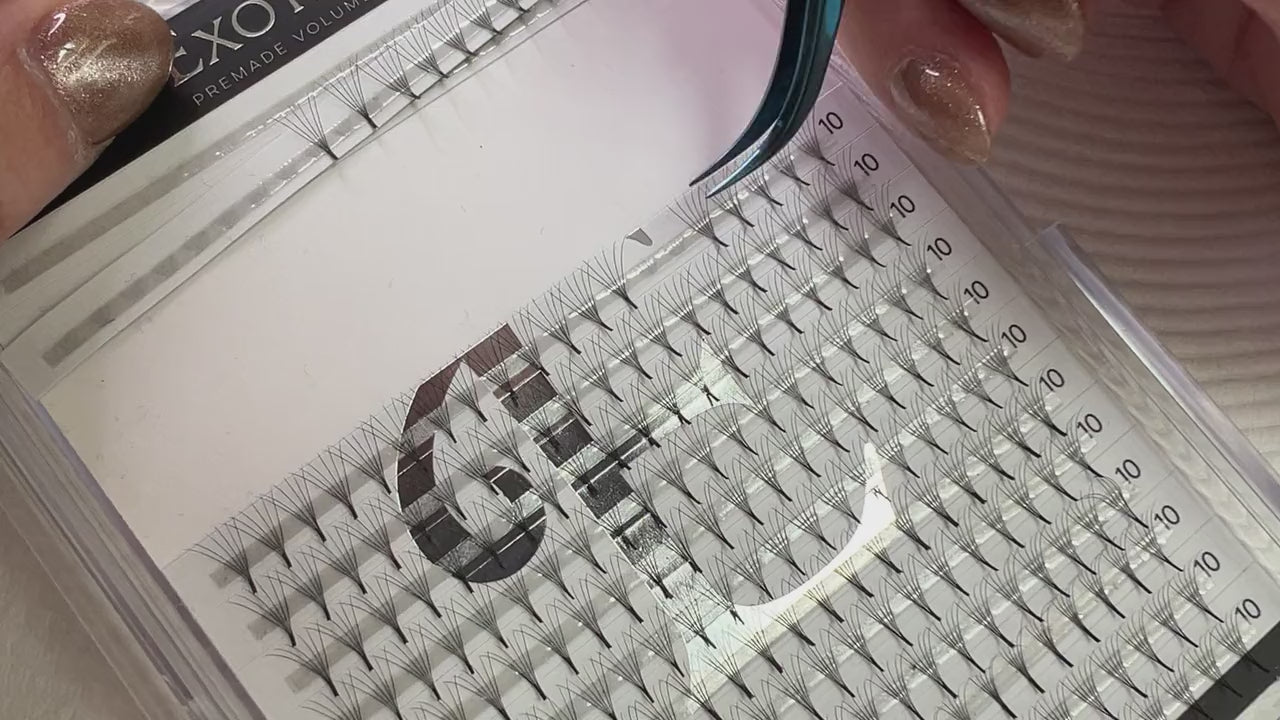
Creating fans involves pinching multiple lashes to form a symmetrical fan shape. You're doing this while also isolating, controlling adhesive, and placing accurately. All at once. Your fan-making might be perfect on a practice tile, but it falls apart when you add timing pressure with a real client. The adhesive is drying. The client is waiting. Your hand cramps.
Most students need 20-30 practice hours just to make consistent fans before adding other skills. That's just the fan-making. It doesn't include the isolation, placement, or adhesive control you're supposed to be doing simultaneously.
Why Volume Failures Usually Trace Back to Individual Technique Gaps
Poor retention, uneven fans, or client discomfort in volume work often stem from weak isolation or adhesive control. A student's volume fans keep closing because their adhesive bead is too large. That's an individual lash skill. They never learned to control bead size because volume training moved too fast.
Troubleshooting volume is harder because you're trying to fix multiple variables at once. Is the fan closing because of adhesive? Placement angle? Isolation? Drying time? If your individual technique is solid, you can eliminate half those variables immediately. If you're learning volume first from specialists like Exotiquelashes, make sure your trainer emphasises these foundational skills before moving to advanced fan techniques.
The Real Cost of Learning Volume First
Learning volume first means longer time to competency, more product waste during practice, and potential client damage. A student learning volume first might take 4-5 hours per client versus 2-3 hours with individual foundation. That's not just inconvenient. It affects your ability to book clients and earn income after graduation.
TAFE assessors often test individual technique even if you're focusing on volume. You need to demonstrate competency in both. Starting with volume means you're backfilling individual skills under assessment pressure. Students with individual mastery feel more prepared for volume training and real clients. They're not juggling new concepts. They're adding one new skill to an existing foundation.
How to Know You're Ready to Add Volume

Readiness is about consistent skill execution, not just completing a course. Some students are ready in weeks. Others need months. That's fine. Rushing into volume before you're ready just means you'll spend longer fixing problems later.
Three Client Scenarios That Signal You've Mastered Individuals
First scenario: you can complete a full set with consistent retention across all lash zones. Inner corners, middle, and outer corners all hold equally well. Second scenario: you handle a client with sparse or damaged natural lashes without causing further harm or poor retention. You adjust your technique based on what you see. Third scenario: you adjust mid-service when you notice a client's lashes are different than expected. Maybe one eye has finer lashes. You change your approach without panicking.
If you're still struggling with any of these, volume will amplify those struggles. For more guidance on lash application techniques and common myths, read our article on Dont Get Them Wet The Trainer Said Fact Or Fiction.
The Timing Test Your Assessor Won't Tell You About
Speed indicates unconscious competence. You're not thinking through every step anymore. A full individual set should take 90-120 minutes with good retention and symmetry. Slow timing reveals you're still problem-solving basic skills that should be automatic. You're pausing to check isolation. You're redoing placements. You're second-guessing adhesive amounts.
Rushing isn't the goal. Consistent, relaxed pace without constant corrections is the marker. If you're taking longer than 120 minutes, you're not ready for volume yet. Keep practising individuals until the process feels smooth.
Your First Year Strategy

Master individual lashes first, then add volume after 3-6 months of consistent practice. This timeline varies based on practice frequency and natural aptitude, not course completion. Some students practise daily and progress faster. Others practise weekly and need more time. Both paths work.
Book your volume training only after you've completed at least 20 individual client sets with good retention. Not practice sets on friends. Real clients who pay and return for fills. That's the benchmark. If you're exploring different lash styles and techniques, our guide on The Wet Look What Is It covers advanced styling options you can consider once you've mastered the fundamentals.
Learning in the right order means you'll ultimately become proficient in both techniques faster. You're not constantly backtracking to fix foundational problems. Both techniques have value. You'll eventually offer both to clients. The question isn't which is better. It's which builds the skills you need to succeed with the other. The answer is individual lashes first.
If you need expert guidance on your lash training journey or want to refine your technique with professional support, contact Exotiquelashes for personalised training and consultation.


Leave a comment
This site is protected by hCaptcha and the hCaptcha Privacy Policy and Terms of Service apply.